By HornTimes Analysis Desk
Mogadishu (HT): For decades, the name Mogadishu was closely connected with bombings, armed attacks and political instability. Today, Somalia’s capital is showing signs of a significant security transformation.
An analysis published by The Economist on August 13, 2026, points to a sharp decline in Al-Shabaab attacks in Mogadishu, alongside visible changes in business activity, construction and nightlife.
The numbers are striking.
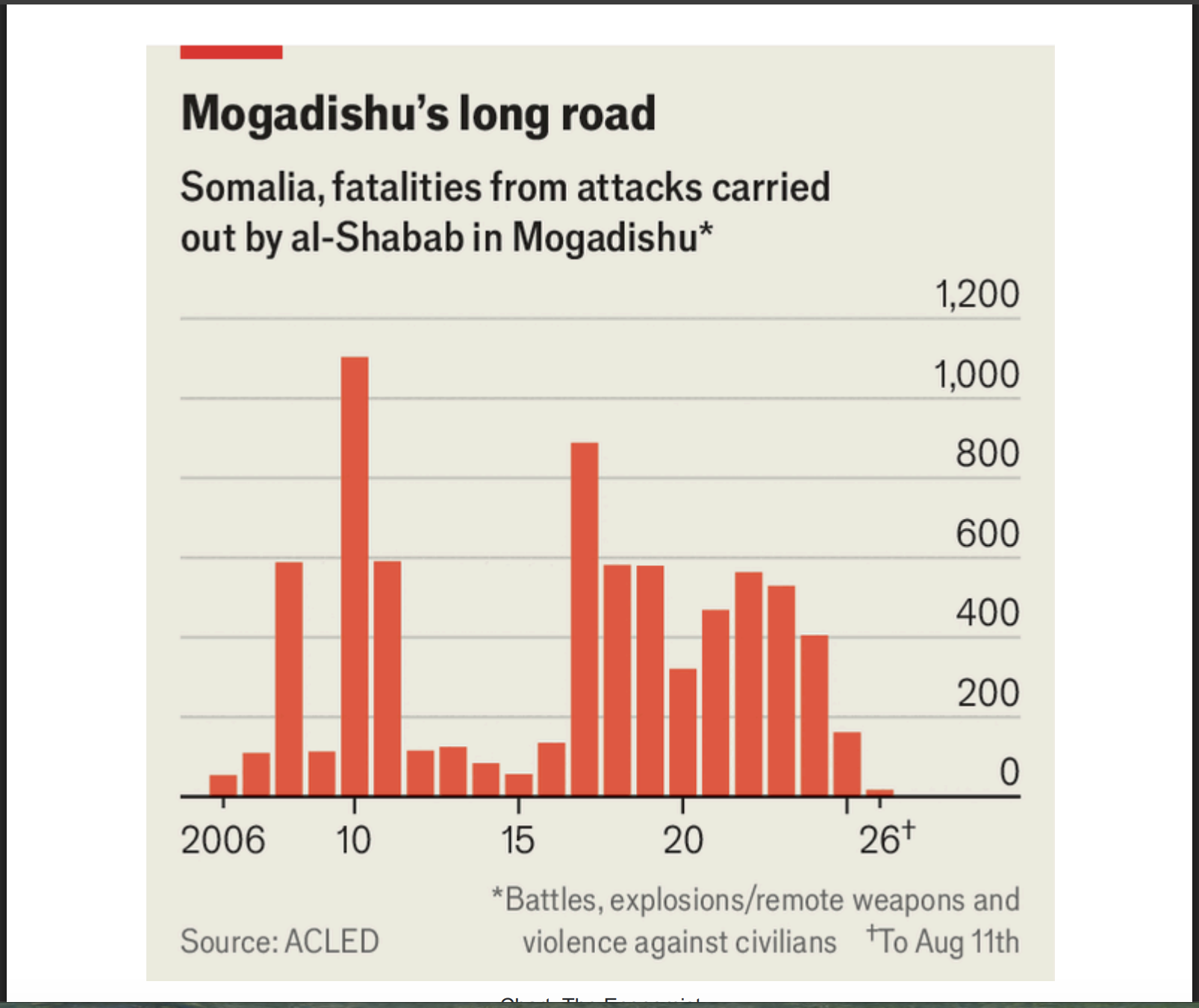
According to ACLED data cited by The Economist, Al-Shabaab carried out 144 attacks in Mogadishu during the third quarter of 2022. By the second quarter of 2026, that number had fallen to only five.
The same data indicates that deaths linked to Al-Shabaab attacks in Mogadishu could reach their lowest annual level in 2026 since the militant group emerged in the mid-2000s.
From Fear to a Changing Nightlife
The change can increasingly be seen in the daily lives of Mogadishu residents.
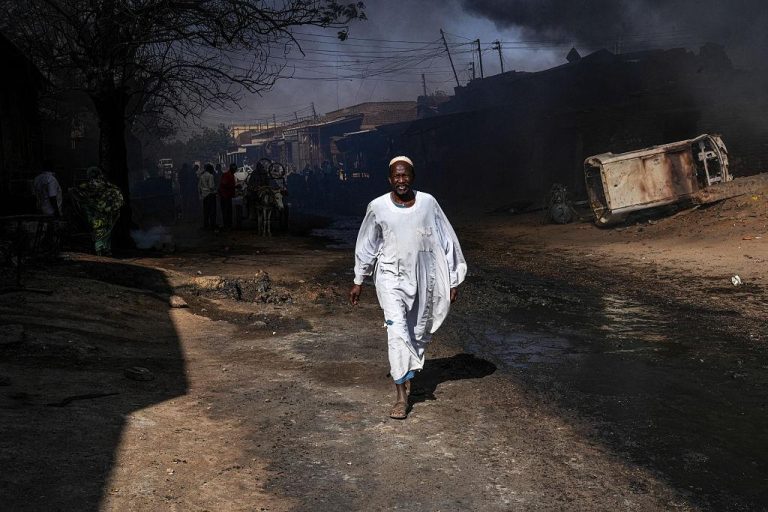
In previous years, many people avoided staying outside after dark because of the risk of bombings and other attacks.
Today, restaurants and cafés remain open late into the night, attracting young people and families.
The difference is especially significant when compared with some of Mogadishu’s darkest years. In 2020 alone, at least 320 people were killed in Al-Shabaab attacks in the capital, according to the report.
The October 2017 truck bombing was even more devastating, killing nearly 600 people.
Mogadishu has therefore not forgotten its violent past, but everyday life is changing.
Security Improvements Are Supporting Business
Improved security is also having an economic effect.
New buildings are appearing across Mogadishu, while the area surrounding Aden Adde International Airport has become significantly more developed.
Satellite images published with The Economist analysis show how much denser development around the airport has become.
One major project is the 26-storey Dahab Tower, which includes luxury apartments, a shopping mall, gym and mosque.
New cafés and other businesses are also expanding as Somali entrepreneurs and members of the diaspora invest in the city.
The relationship is simple: when people feel safer, they are more willing to stay outside, open businesses, construct buildings and invest money.
What Changed Mogadishu’s Security?
There is no single explanation.
One important factor appears to be greater use of technology by Somali security agencies.
According to the report, CCTV cameras have expanded across the city. Police also use an electronic database and tablet devices at checkpoints to identify civilian vehicles.
Plainclothes intelligence officers have also been deployed across Mogadishu.
These measures suggest Somalia’s security system is gradually moving away from depending mainly on physical checkpoints and armed patrols toward intelligence and technology-based security.
Turkey’s Growing Security Role
Turkey is another important part of the story.
Since opening its largest overseas military base in Mogadishu in 2017, Turkey has trained Somali soldiers and supported operations against Al-Shabaab.
Turkey also has major economic interests in Mogadishu, including involvement in the airport and port, while expanding cooperation with Somalia in areas such as energy.
This combination of security cooperation and economic investment gives Ankara a strong interest in maintaining stability in the Somali capital.
But Al-Shabaab Has Not Been Defeated
The biggest warning is that improved security in Mogadishu does not necessarily mean Al-Shabaab has been defeated nationally.
The group continues to control or influence areas outside the capital, and the federal government’s territorial reach has not expanded significantly over the past 18 months, according to The Economist.
There is also another possibility.
Some analysts believe Al-Shabaab may have deliberately changed its strategy in Mogadishu.
Instead of carrying out frequent mass-casualty attacks, the group could be reducing major attacks while continuing to collect money from businesses and maintaining networks inside the city.
If that assessment is correct, the decline in attacks would represent not only improved government security but also a tactical decision by Al-Shabaab.
That makes it difficult to determine how permanent Mogadishu’s security gains really are.
Political Disputes Could Threaten Progress
Political instability represents another danger.
Disagreements between the Federal Government, opposition politicians and some Federal Member States could divert attention and resources away from fighting Al-Shabaab.
The report points to recent political confrontations and armed clashes as warning signs.
Somalia also faces uncertainty over international security support.
The United States announced in July that it would stop supporting UNSOS, the UN body that provides logistical assistance to African Union peacekeepers in Somalia.
If international funding and logistical support continue to decline, Somali security institutions could face greater responsibility at a time when Al-Shabaab remains active outside Mogadishu.
A City Transforming, But Not Yet Safe From Risk
The evidence shows that Mogadishu in 2026 is significantly different from the city many Somalis experienced a decade ago.
Fewer major attacks, expanding nightlife, new construction, growing businesses and greater use of security technology all point toward real progress.
But the transformation remains fragile.
Al-Shabaab continues to operate beyond the capital, political disputes could weaken security cooperation, and Somalia’s international security support is changing.
The important question is therefore no longer simply whether Mogadishu has become safer.
It has.
The bigger question is whether Somalia can make those security gains permanent and extend them beyond the capital.
For Mogadishu, the decline in violence has created something residents have rarely been able to take for granted: the possibility of living an ordinary city life.
Source: The Economist, August 13, 2026; ACLED data cited by The Economist.